Is Public Transport Free In Brussels?
No, public transport in Brussels is not free, but the walkable historic centre, two free EU museums and the free Winter Wonders market are. Here is what needs a ticket and what does not.
Is Public Transport Free In Brussels? The Short Answer
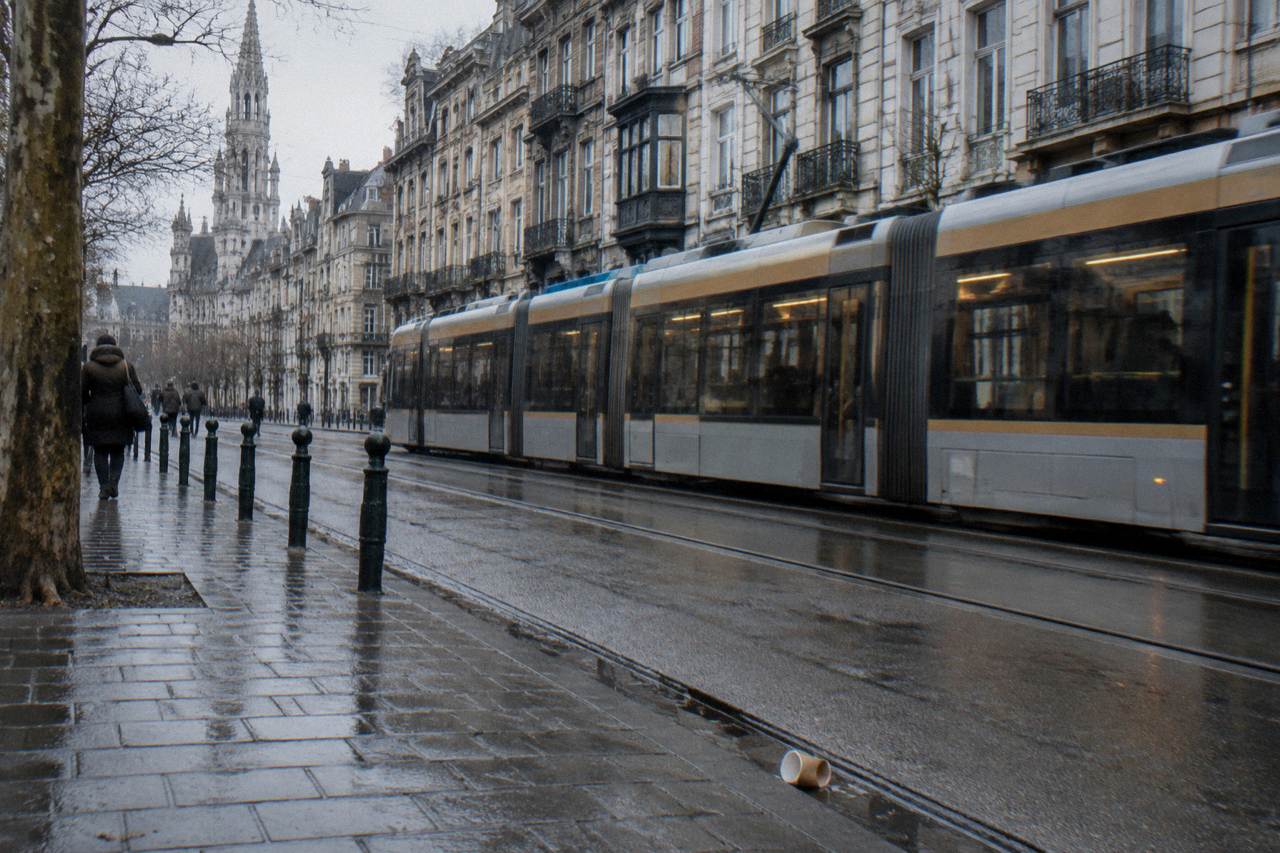
No, public transport in Brussels is not free. The metro, trams and buses are operated by STIB, the Brussels public transport company, and every journey requires a valid ticket. What is free is the city's compact historic centre, which rewards walking, plus a set of museums and events that charge nothing at all.
That single distinction shapes most trips to Brussels. Visitors arriving at the airport or a railway station will need a ticket for the last leg into town, and once the bags are dropped the question changes. The transport network matters mainly for the outward legs, the Atomium plateau and the Cinquantenaire park among them.
No Brussels metro, tram or bus ride is free for tourists, and there is no free-ride window in the day or the week. Check current fares, tickets and passes before travelling on the STIB network pages. Anyone who tells you otherwise is confusing Brussels with another city or repeating a rumour.
The free side of the city is real enough that many visitors never buy more than an airport transfer. Two of the most substantial museums in Brussels, the Parlamentarium and the House of European History, admit everyone free every day they are open, and the Winter Wonders Christmas market is free to enter across its whole run. The sections below separate, item by item, what needs a ticket from what does not, and then point to the free walking tours that replace a hop-on bus for most first-time visitors. Free Things To Do In Brussels covers exactly that boundary between paid infrastructure and free experience.
What Is Free And What Needs A Ticket?
The metro, trams and buses all need a ticket, with no free day or free hour for visitors. Free instead are the streets and squares of the historic centre, the Parlamentarium and the House of European History, both free every day, and the Winter Wonders market, free to enter from late November to early January. The table below splits the two sides cleanly.
STIB runs the network and tickets are required on board. The Brussels Card is a paid pass offered to visitors as a bundle of museum entry with transport included. For a traveller focused on free things, the card solves a problem that mostly does not exist: the free sights of Brussels are either walkable from the centre or reachable with a single ticket.
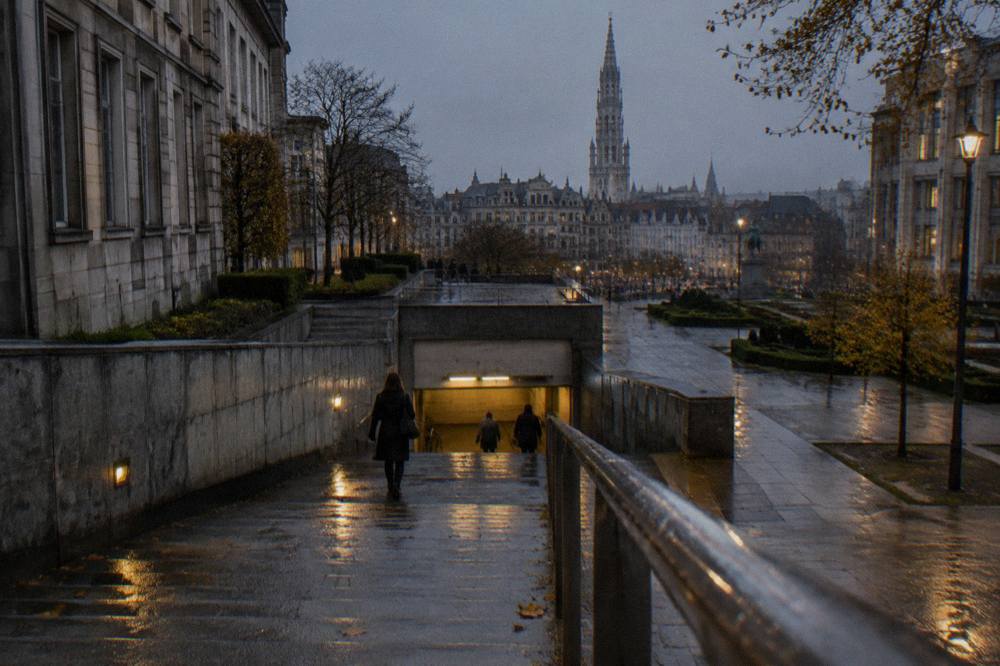
The free side is longer than most visitors expect. The two European Parliament museums charge nothing, and the Winter Wonders market is free to enter. Around them sits the whole pedestrian furniture of central Brussels: the Grand-Place as an open public space, the Manneken Pis statue on its street corner, the Galeries Royales Saint-Hubert as a covered public arcade, and the Mont des Arts gardens as a free public garden. None of these belongs to the transport question, but all of them belong to the reason the transport question is worth asking well.
| Item | Free or ticketed | The condition |
|---|---|---|
| Metro, trams and buses (STIB) | Ticketed | Every ride needs a valid ticket |
| Parlamentarium | Free | Free admission, open seven days a week |
| House of European History | Free | Free entrance seven days a week |
| Winter Wonders Christmas market | Free to enter | 27 November 2026 to 3 January 2027; rides, food and drink are paid |
| Grand-Place and the historic centre streets | Free | Open public space, free to walk at any time |
| Atomium and Mini-Europe | Ticketed | The plaza and exterior views are free; the attractions themselves are not |
One caution belongs here because it trips up budget travellers every winter. Free entry to the Winter Wonders market means the market, the stalls' windows and the atmosphere of the place. Rides, food and drink inside it are paid. The same split applies at the Heysel plateau: standing on the Atomium plaza and looking at the structure costs nothing, while the Atomium itself and Mini-Europe are ticketed attractions. A free view and a paid interior are different things. For a fuller discussion of the Heysel side, see the Atomium guide.
When Is It Open Or Free?
The Parlamentarium and the House of European History are free every day they open: Monday 13:00 to 18:00, Tuesday to Friday 09:00 to 18:00, Saturday and Sunday 10:00 to 18:00. Winter Wonders runs from 27 November 2026 to 3 January 2027, daily 12:00 to 22:00, closing at 18:00 on 24 and 31 December and on 3 January.
Those two museums sit in the European Quarter and they are the strongest free indoor answer to a cold or wet afternoon in Brussels. The free admission is unconditional: no first-Wednesday scheme, no first-Sunday booking race, no permanent-collection-only restriction. The European Parliament's Hemicycle visit is free but requires advance registration and a valid physical ID, so travellers who want the full parliament experience should plan that one ahead rather than turning up. The details are laid out in the European Parliament and Parlamentarium guide.
Winter Wonders, by contrast, is a seasonal event with printed dates. The 2026 edition runs from Friday 27 November 2026 to Sunday 3 January 2027, open daily from 12:00 to 22:00, with earlier closing at 18:00 on 24 and 31 December and on 3 January, and no sound-and-light show on those three days. Entering the market is free, and the City's own event page prints that word. The full programme is published from November 2026, so anyone planning a December trip around specific stalls or attractions should check the official pages nearer the time; the visit.brussels city listings carry the event alongside the operator's own site.
The pattern worth noticing is that Brussels concentrates its free hours in specific windows. The two parliament museums are free all week, the Christmas market is free for its whole run, and the city's other museums run separate first-Wednesday and first-Sunday schemes that are covered in full in the free museums guide. The transport network has no equivalent window. There is no free-riding hour, no museum-style free day on the metro, and no seasonal amnesty on tram fares. A ticket is a ticket in every week of the year. STIB runs the metro, trams and buses, and a valid ticket is required on board every vehicle, with no free ride on any of them. The Brussels Card is a paid pass, not a free entry. The free side of the city is the museums on their free days and the outdoor sights, all reached on foot.
A few practical points follow from these printed hours. The museums open later on Mondays, at 13:00, so a Monday morning in the European Quarter leaves you with outdoor sightseeing rather than indoor shelter. The Hemicycle is the one item in this group that can be refused at the door: without advance registration and a valid physical ID, the free visit is off the table, and a digital copy on a phone is not what is asked for. At Winter Wonders, the late 22:00 closing suits evening visits, but the three early-closing days, 24 and 31 December and 3 January, also lose the sound-and-light show, so plan around them if that display is the draw.
What Is The Best Free Alternative Nearby?
The best free alternative to riding public transport in central Brussels is walking, and the strongest structured version of that is a free, pay-what-you-want walking tour. The Original Tour, English Only, run on freetour.com by SANDEMANs Tours, meets at the Grand-Place City Hall tower, lasts two hours, and is rated 9.3 out of 10 across 14,442 freetour.com reviews.
The rating scale matters as much as the number: freetour.com scores out of 10, so 9.3 sits high on its own scale and should never be converted to a five-star equivalent. The walk costs nothing upfront, and the pay-what-you-want model means the decision about money happens at the end, not at the booking stage.
The walking-first argument is not a claim that Brussels is small. The city spreads from the Sonian Forest in the south to the Heysel plateau in the north, and those legs genuinely need the metro or a tram. The claim is narrower and better supported: the things most first-time visitors come to see, the Grand-Place, the Manneken Pis, the cathedral nave, the Galeries Royales Saint-Hubert, the Mont des Arts gardens, sit in a compact central belt where walking is not only possible but is the normal way locals and visitors both move through it. Anyone doubting the density can read the one-day itinerary and count how little transport it actually needs.
There is also a budget-honesty point that belongs in any answer about transport costs. Brussels is not a free city, and pretending otherwise helps nobody; the honest framing is in is Brussels a cheap city to visit?. What Brussels does have is an unusually generous layer of genuinely free experiences stacked on top of a paid transport network, and a visitor who plans around that layer can keep the ticketed part of the trip to a handful of rides. The free walking tours are the bridge between the two: they start from the centre, they cost nothing to reserve, and they turn the walk between sights into the sight itself.
Which Free Walking Tour Passes This Spot?
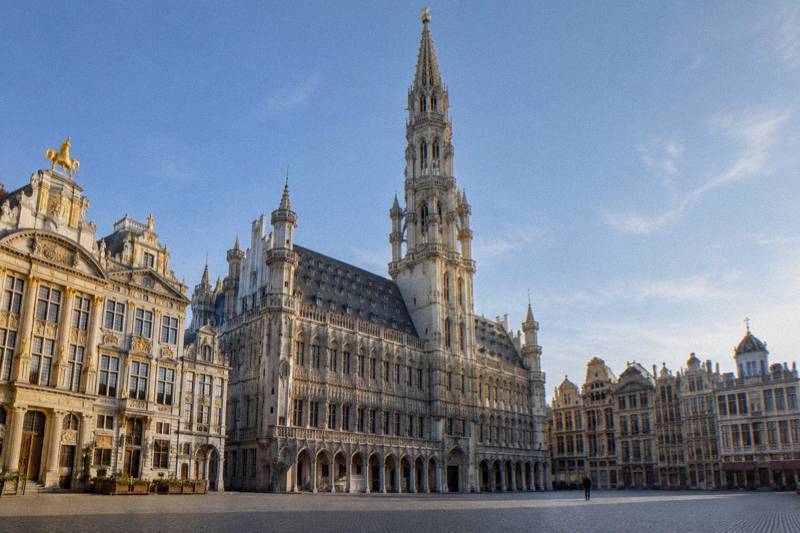
No free walking tour can be said to pass any specific spot. The central meeting ground is the Grand-Place, where most of the free walking tours in Brussels begin. The Grand-Place is the main square of Brussels, surrounded by the Town Hall and the King's House. Most tours gather here before setting out toward the surrounding old town streets.
The 15 free walking tours, across GuruWalk and freetour.com, all operate on the free, pay-what-you-want model, and the ones an English speaker can join are collected on the free walking tours page. The Grand-Place is the meeting ground for the great majority of them, which makes the square the practical answer to "which tour passes this spot": the tours begin there, and where each one goes after that is the guide's own script.
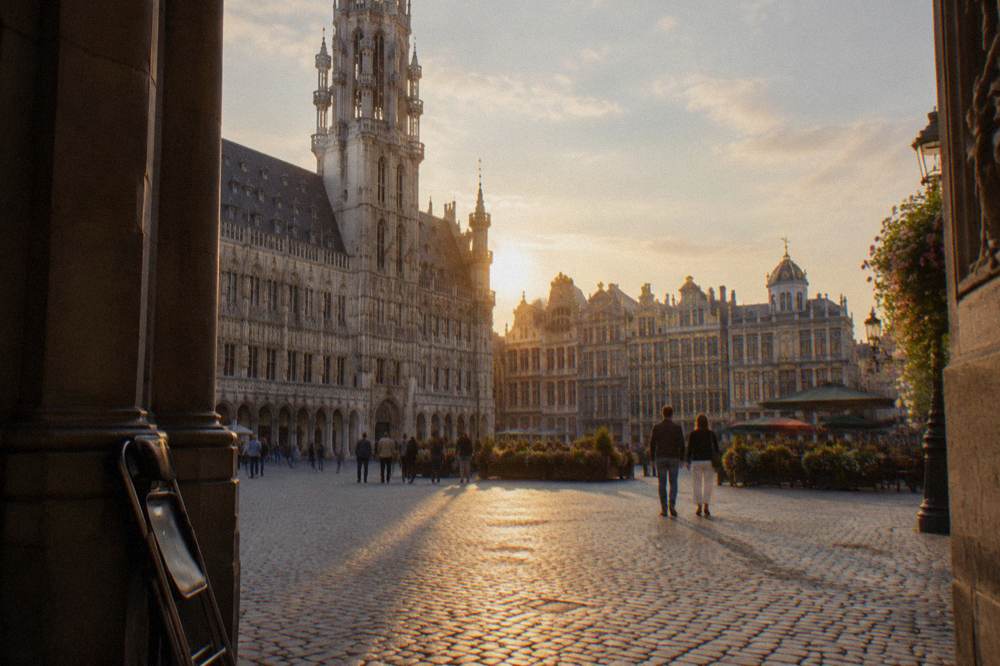
Three walks show how different the same meeting ground can be. The Chocolate Tasting Included walk, run on freetour.com by Bravo Discovery, meets at the Grand-Place City Hall, runs two hours and 30 minutes in English, French and Spanish, and is rated 8.3 out of 10 across 1,497 freetour.com reviews. The Insider Storytellers walk, also on freetour.com, run by Ambassadors Tours, meets at the Grand-Place, runs two hours in English, and is rated 9.4 out of 10 across 583 freetour.com reviews. The PDF Guide Included walk, run on GuruWalk by AdvenTours, meets at the Grand-Place, runs two hours and 30 minutes in English and Spanish, and is rated 4.87 out of 5 across 5,498 GuruWalk reviews.
The scale difference between those rows is the detail most comparison shoppers miss. An 8.3 out of 10 and a 4.87 out of 5 cannot be compared by eye; every rating carries its own scale. The same applies to the evening side of the list: the Evening Dark Side Tour, run on GuruWalk by Legends Free Tours, meets at the Grand-Place, runs two hours in English and Spanish, and is rated 4.68 out of 5 across 726 GuruWalk reviews. It is the walk for a visitor whose transport question has reversed itself, who has finished with the metro for the day and wants the city on foot after dark, a theme expanded in the free things at night guide.
For Spanish-speaking visitors the list runs deeper than the English-capable walks, and each Spanish walk is named with its language plainly on its own page. The through-line for every one of them, on both platforms, is the same price: free, pay what you want, reserved on the platform the walk actually runs on. How much to hand a guide at the end is a question of etiquette rather than of any published fare.
Common Questions About This Topic
Is Public Transport Free In Brussels?
No. The metro, trams and buses are operated by STIB and every ride needs a valid ticket. There is no free day or free hour on the network for visitors.
Do I Need Public Transport To See Central Brussels?
Mostly no. The Grand-Place, the Manneken Pis statue, the Galeries Royales Saint-Hubert, the Mont des Arts gardens and the Marolles district form a walkable central belt. Transport matters mainly for outer sights such as the Atomium plateau and the Cinquantenaire park.
Are Any Big Brussels Museums Free Every Day?
Yes. The Parlamentarium and the House of European History are free seven days a week, with Monday hours from 13:00 and weekend hours from 10:00. The European Parliament Hemicycle visit is also free but needs advance registration and a valid physical ID.
Is The Winter Wonders Christmas Market Free?
Entering the market is free. The 2026 edition runs 27 November 2026 to 3 January 2027, daily 12:00 to 22:00, closing at 18:00 on 24 and 31 December and on 3 January. Rides, food and drink inside the market are paid.
Can A Free Walking Tour Replace A Hop-On Bus Tour?
For the historic centre, yes. Free, pay-what-you-want walking tours meet at the Grand-Place or the Grand-Place City Hall, run between one hour 45 minutes and two hours 45 minutes, and cost nothing upfront. Each tour is chosen by its platform, guide, meeting point and rating.
Where Do I Check Current Brussels Transport Fares?
On the operator's own site, the STIB network pages, before travelling. The operator's pages carry tickets, passes and current prices.